- Aeviva
- Posts
- The Food Pyramid Was a Scam: How Bad Science Made America Fat and Sick
The Food Pyramid Was a Scam: How Bad Science Made America Fat and Sick
For 30 years, the government told you to eat 6-11 servings of bread daily while avoiding fat. Here's why this advice was catastrophically wrong
In partnership with

Estimated Read Time: 6 minutes
The USDA Food Pyramid (1992-2011) recommended 6-11 servings of bread, pasta, and grains daily while demonizing fats.
During these decades, obesity rates doubled (from 23% to 42%), type 2 diabetes tripled, and metabolic disease became epidemic.
The pyramid wasn't based on rigorous science but on political pressure, corporate lobbying, and cherry-picked studies that have since been debunked.

Today's Issue
Main Topic: Why the Food Pyramid was fundamentally flawed, the political and corporate influences that shaped it, what science actually says about nutrition, and what you should eat instead
Subtitles:
The original food pyramid: built on shaky science and industry lobbying
Why "low-fat" made us fatter: the carbohydrate-insulin-obesity connection
What studies actually show: saturated fat isn't the villain
Corporate influence: how grain and sugar industries shaped dietary guidelines
What to eat instead: evidence-based nutrition that actually works
Abstract: The USDA Food Pyramid (introduced 1992, revised as MyPyramid 2005, replaced by MyPlate 2011) recommended carbohydrate-dominant diet with 6-11 daily servings of bread, cereal, rice, and pasta forming foundation (300-550g carbohydrates, 55-60% of calories), while limiting fats to 20-30% of calories and particularly restricting saturated fats below 10%, based on flawed lipid hypothesis (dietary saturated fat raises blood cholesterol causing heart disease) originating from Ancel Keys' Seven Countries Study (1958) that selectively analyzed 7 of 22 available countries showing correlation between fat intake and heart disease while ignoring 15 countries with contradictory data (France, Switzerland with high saturated fat but low heart disease, Chile with low fat but high heart disease). Implementation of low-fat high-carbohydrate guidelines coincided with catastrophic metabolic health decline: obesity rates increased from 23% (1988-1994) to 42% (2017-2020), type 2 diabetes prevalence tripled from 4% to 13%, metabolic syndrome now affects 35% of adults, non-alcoholic fatty liver disease increased from 15% to 38%, while cardiovascular disease remained leading cause of death despite dramatic fat reduction. Physiological mechanisms explain failure: high carbohydrate intake (especially refined grains and added sugars) causes repeated insulin spikes throughout day, chronic elevated insulin promotes fat storage and inhibits fat burning, insulin resistance develops from constant stimulation, hyperinsulinemia drives hunger and metabolic dysfunction, while dietary fat (including saturated fat) produces minimal insulin response, increases satiety, and provides stable energy. Modern research including meta-analyses of controlled trials shows saturated fat replacement with refined carbohydrates increases cardiovascular disease risk, while saturated fat replacement with polyunsaturated fats shows modest benefit, and dietary cholesterol has minimal effect on blood cholesterol in most people (hepatic cholesterol synthesis compensates for dietary intake).
Become An AI Expert In Just 5 Minutes

If you’re a decision maker at your company, you need to be on the bleeding edge of, well, everything. But before you go signing up for seminars, conferences, lunch ‘n learns, and all that jazz, just know there’s a far better (and simpler) way: Subscribing to The Deep View.
This daily newsletter condenses everything you need to know about the latest and greatest AI developments into a 5-minute read. Squeeze it into your morning coffee break and before you know it, you’ll be an expert too.
Subscribe right here. It’s totally free, wildly informative, and trusted by 600,000+ readers at Google, Meta, Microsoft, and beyond.
1. The Original Food Pyramid: Built on Shaky Science and Industry Lobbying 🏛️📊

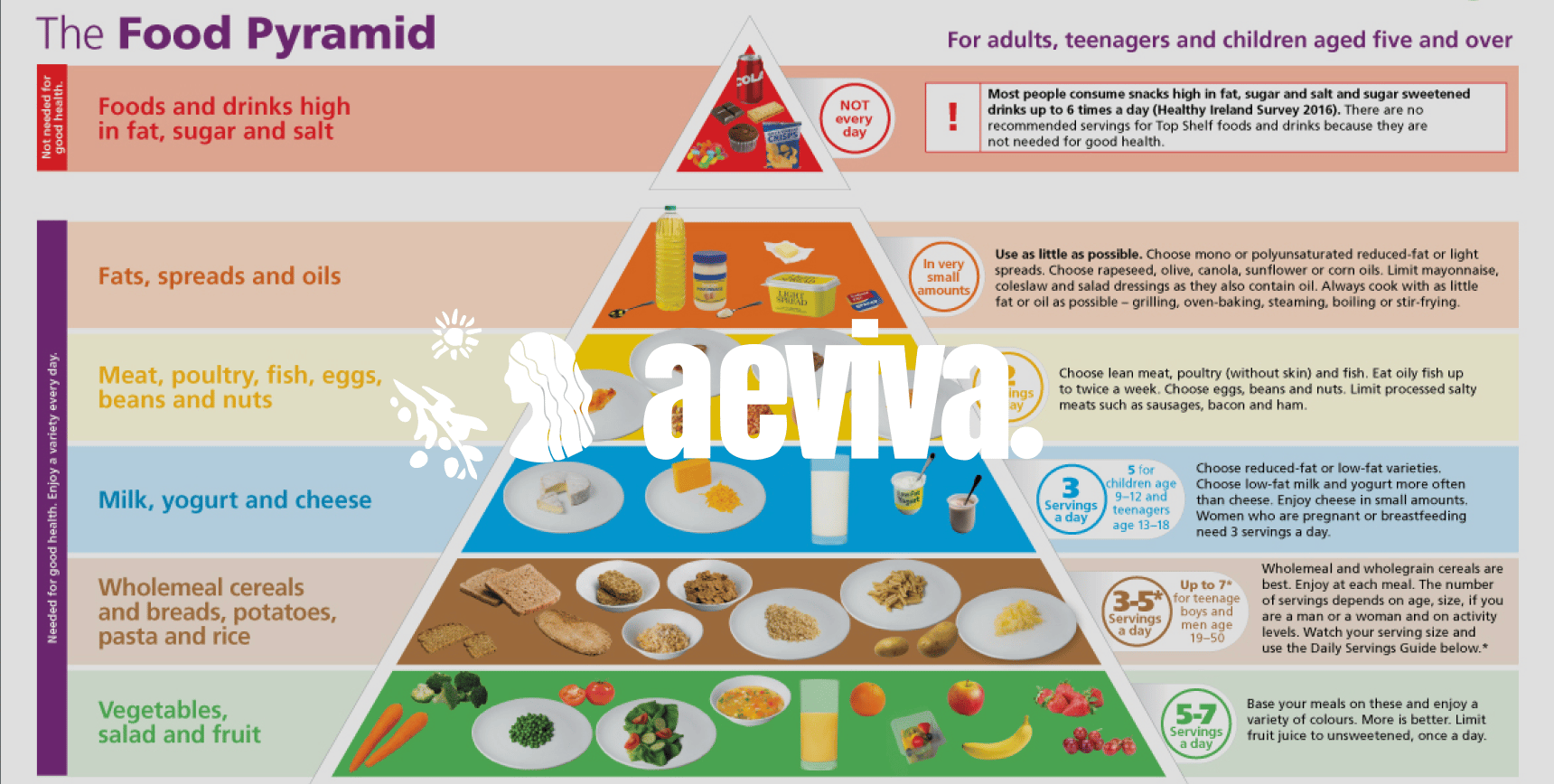
The structure: Food Pyramid base (largest recommendation) was 6-11 servings daily of bread, cereal, rice, pasta (grains). Above that: 2-4 servings fruit, 3-5 servings vegetables. Then: 2-3 servings dairy, 2-3 servings meat/protein. Tiny tip: fats, oils, sweets "use sparingly." Translation: 55-60% calories from carbohydrates (300-550g daily), 20-30% from fat (limiting saturated fat below 10%), 10-15% protein.
The "science" behind it: Based primarily on Ancel Keys' lipid hypothesis (dietary saturated fat raises cholesterol causing heart disease) from his Seven Countries Study. Keys analyzed data from 7 countries (Greece, Italy, Yugoslavia, Netherlands, Finland, Japan, USA) showing correlation between saturated fat intake and heart disease mortality.
Problem: Keys had data from 22 countries but cherry-picked 7 that fit his hypothesis, ignoring 15 that didn't (France and Switzerland had high saturated fat but low heart disease; Chile had low fat but high heart disease).
When all 22 countries analyzed, correlation disappeared. This should have discredited the hypothesis but it was already gaining institutional momentum.
Political pressure: Original pyramid (1991) actually showed fats and dairy at base with grains above. Wheat industry, cattlemen, dairy lobby all protested.
USDA revised it, flipping grains to bottom (eat more) and fats to top (eat less). Senator Bob Dole (Kansas wheat state) and other grain-state representatives pressured USDA. Final pyramid served political and corporate interests more than health.
Supporting "evidence" was weak: Short-term trials showing saturated fat increases LDL cholesterol (but not separating particle types - small dense LDL is atherogenic, large fluffy LDL is benign), epidemiological associations (correlation not causation), and assumption that cholesterol is surrogate for heart disease (it isn't—many people with normal cholesterol have heart attacks, many with high cholesterol never do).
2. Why "Low-Fat" Made Us Fatter: The Carbohydrate-Insulin-Obesity Connection 🍞📈
The obesity epidemic timeline: 1988-1994 (early pyramid era): 23% of Americans obese. 2017-2020: 42% obese.
This unprecedented increase coincided exactly with implementation of low-fat guidelines. Diabetes followed same trajectory: 4% in 1990 to 13% in 2020. Metabolic syndrome exploded from 15% to 35% of adults.
The mechanism: When you eat carbohydrates (especially refined grains, sugar), blood glucose spikes. Pancreas releases insulin to move glucose into cells.
Insulin is fat-storage hormone: it signals body to store energy as fat and prevents fat burning. High-carbohydrate diet causes multiple insulin spikes daily, keeping insulin chronically elevated.
Result: your body is in constant fat-storage mode, never in fat-burning mode.
Additionally, repeated insulin spikes lead to insulin resistance (cells become less responsive, requiring more insulin), creating vicious cycle. High insulin also increases hunger (insulin suppresses leptin, the satiety hormone) and causes energy crashes (blood sugar drops after insulin surge), leading to cravings for more carbs.

What happened when people followed pyramid: They replaced eggs and bacon (fat and protein, minimal insulin response) with cereal and skim milk (high carbs, massive insulin spike). They replaced steak with pasta. They replaced full-fat yogurt with low-fat yogurt loaded with added sugar. They ate "healthy whole grains" at every meal—toast for breakfast, sandwich for lunch, pasta for dinner—keeping insulin elevated 14-16 hours daily. They felt hungry all the time despite eating constantly because high insulin prevented access to stored body fat for energy.
The low-fat processed food explosion: Food manufacturers created thousands of "low-fat" products by replacing fat with sugar, corn syrup, and refined carbs. Low-fat cookies, crackers, salad dressings, yogurt—all marketed as health foods but metabolically disastrous. Fat provides satiety (you feel full); removing fat meant people ate more. Sugar is addictive; adding sugar meant people bought more. Corporations profited enormously while public health collapsed.
3. What Studies Actually Show: Saturated Fat Isn't the Villain 🥩🧈
Modern meta-analyses (combining multiple studies): 2010 meta-analysis in American Journal of Clinical Nutrition (21 studies, 347,747 participants): "No significant evidence that saturated fat increases heart disease or stroke risk." 2014 meta-analysis in Annals of Internal Medicine (72 studies): "Current evidence does not support cardiovascular guidelines that recommend high polyunsaturated fat and low saturated fat." These comprehensive reviews found no association between saturated fat intake and heart disease, stroke, or all-cause mortality.
What matters more: Type of carbohydrates replacing saturated fat. When people replace saturated fat with refined carbohydrates (white bread, sugar), heart disease risk increases.
When replaced with polyunsaturated fats (nuts, fish, olive oil), modest benefit seen. Context matters: saturated fat in context of low-carb diet (meat, eggs, butter with vegetables) has different metabolic effects than saturated fat with high refined carbs (burger bun, fries, soda).
Dietary cholesterol myth: For decades, pyramid warned against egg yolks and shrimp due to dietary cholesterol. Research now shows dietary cholesterol has minimal effect on blood cholesterol for 75% of people (your liver produces 80% of blood cholesterol and adjusts production based on dietary intake).
2015 US Dietary Guidelines finally removed cholesterol limits, acknowledging "cholesterol is not a nutrient of concern for overconsumption." Too late millions avoided nutritious eggs for decades based on flawed advice.
LDL cholesterol is complex: Pyramid era focused on total and LDL cholesterol as primary risk markers. We now know LDL particle size and number matter more: small dense LDL particles (caused by high carb intake, especially sugar) are atherogenic (cause plaque), while large fluffy LDL particles (typical with lower carb intake) are benign.
Standard cholesterol tests don't differentiate - you can have "high LDL" with mostly safe large particles, or "normal LDL" with dangerous small particles.

4. Corporate Influence: How Grain and Sugar Industries Shaped Dietary Guidelines 🏢💰
Sugar industry's secret campaign: 2016 exposé in JAMA Internal Medicine revealed sugar industry paid Harvard scientists equivalent of $50,000 in 1960s (about $500,000 today) to publish review minimizing sugar's role in heart disease while emphasizing fat as culprit.
Industry selected which studies to include, provided input on manuscript, published in prestigious New England Journal of Medicine without disclosing funding. This influenced decades of policy deflecting blame from sugar to fat.
Grain industry lobbying: Wheat, corn, and cereal manufacturers had massive financial interest in high-carb guidelines. They funded nutrition research, sponsored conferences, placed representatives on dietary guideline committees. When pyramid was released, grain industry celebrated. Cereal was marketed as health food, pasta as athlete fuel, bread as foundation of healthy diet.
Conflicts of interest on guideline committees: Members of committees writing dietary guidelines often had industry ties: research funding from food corporations, consulting fees, speaking honoraria.
These conflicts weren't disclosed or were downplayed. Independent scientists questioning low-fat dogma were marginalized or excluded. Institutional momentum and financial incentives aligned behind maintaining status quo even as contradictory evidence accumulated.
The "healthy whole grains" myth: While whole grains are better than refined grains (more fiber, vitamins), they still spike blood sugar and insulin substantially. Whole wheat bread has glycemic index of 69 (similar to white bread at 75, table sugar at 65).
Two slices whole wheat bread raises blood sugar more than two tablespoons of pure sugar.
5. What to Eat Instead: Evidence-Based Nutrition That Actually Works 🥑🥩
Prioritize protein and healthy fats: Protein (meat, fish, eggs, poultry) and fats (avocados, nuts, olive oil, butter from grass-fed cows) provide satiety, stable energy, minimal insulin response, and essential nutrients. They keep you full for hours, preventing cravings and overeating. Build meals around protein and fat, not carbohydrates.
Vegetables (non-starchy): Leafy greens, broccoli, cauliflower, peppers, zucchini, asparagus—eat abundantly. Low calorie, high fiber, packed with nutrients, minimal blood sugar impact. These should fill your plate, not grains.
Limit refined carbohydrates and sugar: Bread, pasta, rice, cereal, crackers, pastries, soda, juice, candy—these spike blood sugar and insulin, promote fat storage, cause inflammation, and drive metabolic disease. Treat as occasional indulgences, not dietary staples. The pyramid had this backwards (grains as foundation).
Moderate whole food carbs: Fruits (especially berries), sweet potatoes, legumes, properly prepared whole grains (soaked, fermented) can fit into healthy diet in moderate amounts for active individuals. But they're not necessary—many thrive on very low carb intake. Listen to your body's response.
Real food, not processed: Eat foods your great-grandmother would recognize. Single-ingredient foods: meat, fish, eggs, vegetables, fruits, nuts, olive oil. Avoid packaged products with ingredient lists you can't pronounce. This simple rule eliminates most metabolic problems.
Individual variation matters: Some people tolerate more carbohydrates (younger, active, good insulin sensitivity). Others need very low carb (insulin resistant, diabetic, obese). Test your blood sugar response to foods, track energy and hunger, adjust accordingly. No one-size-fits-all pyramid can capture this.

💡 Pro Tip: If you want to understand your personal carb tolerance, get a continuous glucose monitor for one month. Eat different foods and see your blood sugar response. You'll learn more about your metabolism than any government pyramid can teach you.
Takeaways
The USDA Food Pyramid (1992-2011) recommended carbohydrate-dominant diet with 6-11 daily grain servings (55-60% calories from carbs) while restricting fats to 20-30% based on Ancel Keys' cherry-picked Seven Countries Study (analyzed 7 of 22 available countries ignoring 15 with contradictory data showing no fat-heart disease correlation), political pressure from grain industry lobbying, and sugar industry's secret 1960s campaign paying Harvard scientists to deflect blame from sugar to fat, resulting in implementation coinciding with catastrophic metabolic health collapse: obesity doubling from 23% to 42%, diabetes tripling from 4% to 13%, metabolic syndrome increasing from 15% to 35%.
High-carbohydrate low-fat approach failed because carbohydrates (especially refined grains and added sugars) cause repeated insulin spikes promoting fat storage and preventing fat burning, chronic elevated insulin leads to insulin resistance and hyperinsulinemia driving hunger and metabolic dysfunction, while dietary fat produces minimal insulin response and increases satiety, with food manufacturers profiting from "low-fat" processed products loaded with sugar creating metabolically disastrous foods marketed as healthy (low-fat cookies, yogurt, salad dressings).
Modern meta-analyses show saturated fat has no significant association with heart disease risk (2010 AJCN analysis of 347,747 participants, 2014 Annals of Internal Medicine review of 72 studies), what matters is replacing saturated fat with polyunsaturated fats versus refined carbohydrates (latter increases cardiovascular risk), and dietary cholesterol has minimal effect on blood cholesterol for 75% of people with 2015 guidelines finally removing cholesterol limits, while evidence-based nutrition prioritizes protein and healthy fats for satiety and stable energy, non-starchy vegetables abundantly, limiting refined carbs and sugar (treating as occasional not staples), with individual carbohydrate tolerance varying based on activity level, insulin sensitivity, and metabolic health.
Feedback & Sponsorship
What'd you think of this week's newsletter? Hit reply to let us know. Did we crush it? Blow your mind? We read every response.
Want your brand in front of hundreds of thousands of readers? Contact us for sponsorship opportunities [email protected]
Want more where that came from? Head to our website
Reply