- Aeviva
- Posts
- Asthma vs COPD: Why One Is Reversible and the Other Isn't
Asthma vs COPD: Why One Is Reversible and the Other Isn't
Both make you wheeze and gasp for air, but the mechanisms and outcomes are completely different

In partnership with

Estimated Read Time: 6 minutes
Asthma and COPD both cause wheezing, shortness of breath, and chronic coughing.
But asthma is reversible with treatment, while COPD progressively destroys your lungs forever.
Over 300 million people have asthma globally, and 3 million people die from COPD every year.
Today's Issue
Main Topic: Understanding asthma and COPD, what they are, how they differ, and why one kills
Subtitles:
What asthma is: reversible airway inflammation and muscle spasms
What COPD is: permanent lung destruction from smoking and pollution
The key differences: reversibility, age of onset, and lung function
Treatment approaches: inhalers, steroids, and what actually works
Prevention and prognosis: why one you can live with, the other kills slowly
Abstract: Asthma is a chronic inflammatory breathing disease where airways overreact to triggers causing reversible narrowing, affecting 300+ million people globally and typically beginning in childhood.
COPD (chronic obstructive pulmonary disease) involves permanent destruction of lung tissue and airways primarily from smoking (85-90% of cases) or air pollution, affecting 380+ million people with 3 million annual deaths. The critical distinction is reversibility: asthma symptoms resolve completely between attacks and respond to medications that open airways, while COPD involves permanent structural damage with progressive decline. Asthma treatment focuses on inhaled steroids to control inflammation and quick-relief inhalers for acute symptoms, while COPD management centers on quitting smoking (the only intervention slowing progression), long-acting inhalers, oxygen therapy in advanced stages, and breathing exercises.
This newsletter examines how each disease works, clinical differences, diagnostic testing, treatment protocols, and why asthma patients can live normal lives while COPD is progressive and ultimately fatal.The fentanyl crisis represents a qualitative shift in drug overdose deaths, not just a quantitative increase.
Asthma and COPD are the two most common lung diseases that make breathing difficult, affecting nearly 700 million people worldwide combined. Both cause wheezing, shortness of breath, chest tightness, and chronic coughing, leading to frequent confusion between them. However, they're fundamentally different diseases with different causes, mechanisms, treatments, and outcomes. Asthma is characterized by reversible airway inflammation and overreaction to triggers—patients can breathe completely normally between attacks, and with proper treatment, most live regular lives with no limitations. COPD is progressive, permanent destruction of lung tissue, almost always caused by smoking or chronic air pollution exposure, with no cure and inevitable decline leading to respiratory failure and death. Understanding what's happening in the lungs during each disease, how doctors distinguish them, why asthma responds to certain medications while COPD doesn't reverse, and what treatments actually work reveals why early diagnosis matters enormously for asthma (preventing permanent changes) and why COPD prevention through not smoking is critical (because once lung tissue is destroyed, it doesn't grow back).
Don't wait until New Years to take control of your health.

Every year it’s the same - November comes, the days get dark and cold, you start skipping your morning workout, and you start to lose control of your health habits.
It’s easy to think “I’ll worry about getting back on track next year” - but there’s no reason you can’t get a head start now.
You just need a daily health habit that’s ACTUALLY easy to stick with.
That’s where AG1 comes in. With just one quick scoop every morning, you’ll get over 75 ingredients that help support your immune health, gut health, energy, and close nutrient gaps in your diet.
Right now is the best time to get started - with every new subscription, they are giving away $126 in free gifts for the holidays.
Give AG1 a try today and take back control of your health this holiday season.
1. What Asthma Is: Reversible Airway Inflammation and Muscle Spasms 🫁💨

Asthma is a chronic disease where airways are constantly inflamed and overreact to triggers, causing reversible narrowing of the breathing tubes, making it hard to breathe.
What happens in asthmatic lungs:
Chronic low-level inflammation: Even when feeling fine, asthmatic airways have ongoing irritation. Special immune cells release chemicals that keep airways inflamed and sensitive.
Sudden muscle spasms during attacks: When exposed to triggers, the smooth muscles wrapped around airways contract violently and suddenly, squeezing the breathing tubes narrow. This happens within seconds to minutes of trigger exposure.
Airway width can decrease by 50-80% during severe attacks, creating the characteristic wheezing sound as air is forced through narrowed passages.
Excess mucus production: Airways produce thick, sticky mucus that further blocks airflow and causes coughing.
Permanent changes if untreated: With years of poorly controlled asthma, repeated inflammation causes permanent thickening of airway walls and scarring.
This is why early aggressive treatment matters - preventing these permanent changes keeps lung function normal long-term.
Common triggers:
Allergens: Pollen, dust mites, mold, pet dander, cockroach droppings
Irritants: Smoke, strong perfumes, air pollution, cleaning chemicals
Exercise: Physical activity triggers attacks in 40-90% of people with asthma
Infections: Colds, flu, respiratory viruses
Weather: Cold air, sudden humidity changes, thunderstorms
Medications: Aspirin, ibuprofen in some people
Stress: Emotional stress can trigger attacks
The reversibility: This is asthma's defining feature. With treatment (medications that open airways and reduce inflammation) or simply after the trigger is removed, breathing returns completely to normal. Between attacks, many people with asthma breathe perfectly normally with no limitations.
Who gets asthma: Over 300 million people globally have asthma, approximately 8% of adults and 10-15% of children. Rates are increasing worldwide, particularly in cities, possibly because reduced childhood exposure to germs leads to overactive immune systems that attack harmless triggers.
💡 Fun Fact: The word "asthma" comes from ancient Greek meaning "panting" or "gasping." Doctors recognized the condition over 2,000 years ago. Treatments evolved from smoking tobacco leaves (1800s, terrible idea) to today's safe and effective inhaled medications.
2. What COPD Is: Permanent Lung Destruction from Smoking and Pollution 🚬💀
COPD (Chronic Obstructive Pulmonary Disease) is an umbrella term for two related conditions: chronic bronchitis (long-term inflammation and mucus in airways) and emphysema (destruction of tiny air sacs in lungs where oxygen enters the blood). Unlike asthma, COPD involves permanent, irreversible damage.
What happens in COPD lungs:
Chronic bronchitis: Airways are constantly inflamed and narrowed. Mucus glands enlarge and produce excessive thick mucus.
Medical definition: productive cough for at least 3 months per year for 2 consecutive years. This causes the characteristic "smoker's cough."
Emphysema - destruction of air sacs: The walls between millions of tiny air sacs (where oxygen transfers to blood) are destroyed, creating large, inefficient spaces.
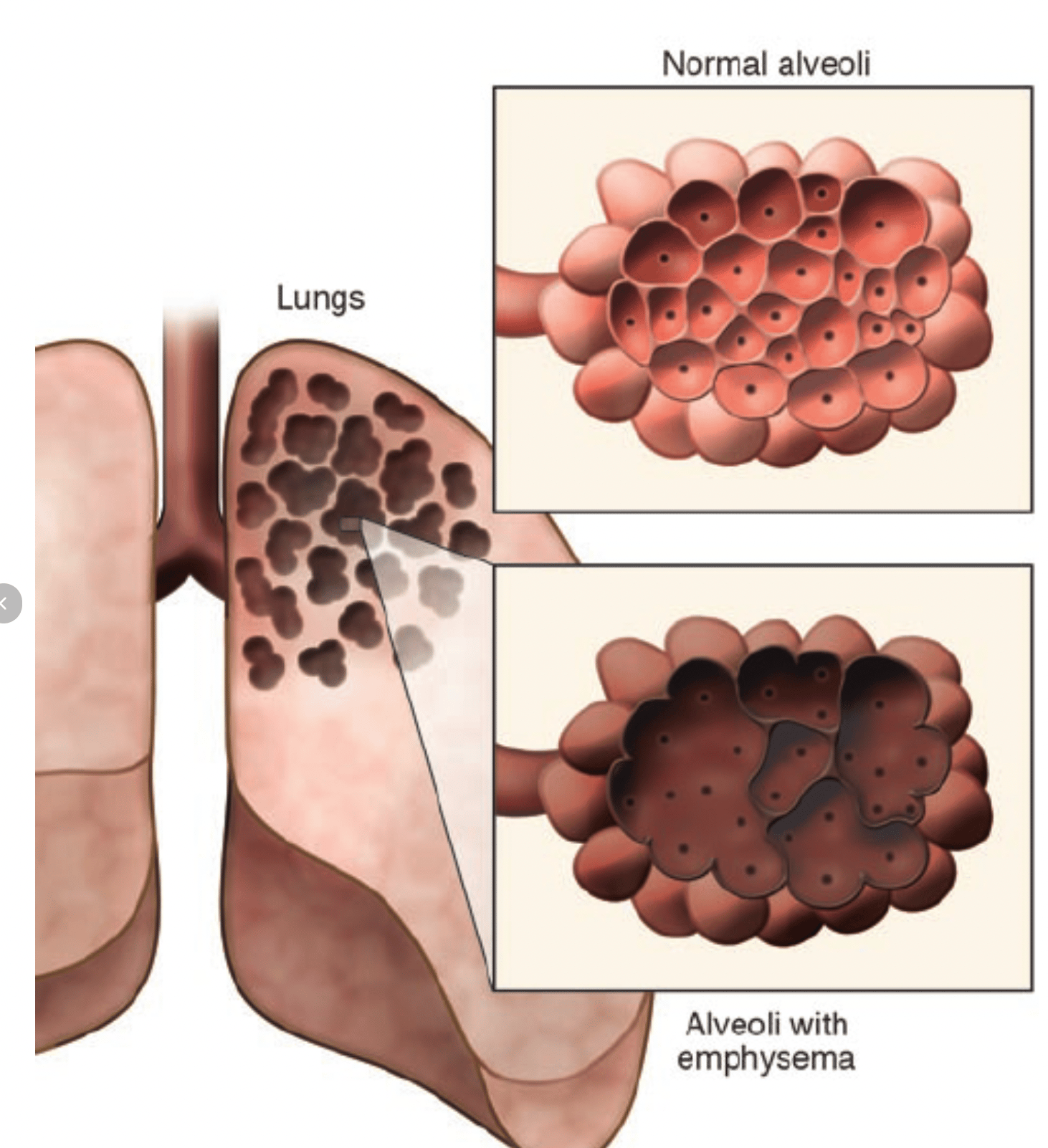
Normal lungs have about 300 million of these tiny air sacs with total surface area the size of a tennis court.
In severe COPD, half or more of this surface area is destroyed, making it impossible to absorb enough oxygen.
Loss of lung elasticity: Healthy lungs are like elastic balloons, they naturally snap back after you breathe in, pushing air out.
In COPD, this elasticity is destroyed, so air gets trapped in lungs. Exhaling becomes difficult and exhausting. Patients develop "barrel chest" as lungs become chronically over-inflated because they can't push air out.
Airway collapse: Without structural support from destroyed tissue, small airways collapse during exhalation, trapping even more air.
The irreversibility: Unlike asthma, medications that open airways provide minimal improvement because the problem isn't just muscle tightness - it's missing tissue. Once air sac walls are destroyed, they don't regenerate. COPD is progressive and ultimately fatal without lung transplantation.
Primary causes:
🚫 Smoking: Responsible for 85-90% of COPD cases.
Air pollution: Indoor air pollution from burning wood, animal dung, or crop waste for cooking and heating causes COPD in non-smoking populations, particularly women in developing countries. Outdoor air pollution also contributes, especially in heavily polluted cities.
Rare genetic condition: A small percentage (1-2%) have a rare inherited condition where a protective protein is missing, causing early lung destruction even without smoking.
Who gets COPD: COPD affects 380+ million people globally, with 3 million deaths annually (the third leading cause of death worldwide). 90% of deaths occur in low and middle-income countries where smoking rates remain high and indoor air pollution from cooking fires is widespread.
💡 Critical Context: COPD typically develops after decades of smoking or pollution exposure, with symptoms appearing in the 50s-60s. By the time breathlessness is noticeable during daily activities, 50% or more of lung function is already irreversibly lost. Early detection in at-risk people is critical but rarely happens.
3. The Key Differences: Reversibility, Age of Onset, and Lung Function 🔍⚖️

Feature | Asthma | COPD |
|---|---|---|
What happens | Reversible airway inflammation and muscle spasms | Permanent destruction of lung tissue and airways |
When it starts | Usually childhood or young adulthood (60% before age 18) | Middle age or later (typically 50s-60s after decades of smoking) |
Main cause | Genetic predisposition + triggers (allergens, irritants) | Smoking (85-90%) or chronic air pollution exposure |
Can it be reversed? | YES, completely with treatment | NO, permanent damage that doesn't improve |
Symptom pattern | Comes and goes symptoms appear during attacks, gone between attacks | Always there and getting worse, constant symptoms worsening over years |
Breathing between attacks | Often completely normal | Always abnormal, getting progressively worse |
Breathing test findings | Narrowed airways that open fully with quick-relief inhaler | Narrowed airways that barely improve with inhaler |
Type of inflammation | Allergic-type inflammation | Destructive chronic inflammation |
Chest X-ray | Usually looks normal | Shows over-inflated lungs with destroyed areas |
Do steroids help? | YES - excellent response, cornerstone of treatment | NO - minimal benefit, used only during flare-ups |
Life expectancy | Normal with proper treatment - most live regular lifespans | Shortened - average 5-10 years after diagnosis of severe COPD |
Deaths per year | Low (1,000-2,000 US deaths/year) when properly managed | High (3 million deaths/year globally) |
💡 Pro Tip: Some people have features of both diseases (15-20% of cases). This typically happens when people with asthma smoked for years, developing permanent damage on top of their asthma. These patients have the worst outcomes and need treatments targeting both problems.
4. Treatment Approaches: Inhalers, Steroids, and What Actually Works 💊🌬️
Asthma treatment (goal: control inflammation, prevent attacks, live normally):
Daily controller medications (prevent attacks):
Inhaled steroids: The most important asthma medication.
Examples: Flovent, Pulmicort. These reduce airway inflammation, prevent attacks, and stop permanent changes from happening. Studies show inhaled steroids reduce attacks by 50-70% and dramatically improve quality of life.
Long-acting airway openers: Examples: salmeterol, formoterol. These relax airway muscles for 12+ hours. Critical: These should never be used alone (studies showed increased death risk). Always combined with inhaled steroids. Most modern inhalers combine both (Advair, Symbicort).
Other medications: Pills like montelukast (Singulair) block inflammatory chemicals. Less effective than inhaled steroids but useful for exercise-induced asthma.
Quick-relief medications (use during attacks):
Albuterol (rescue inhalers): Examples: Ventolin, ProAir. Fast-acting medications that open airways within 5 minutes, lasting 4-6 hours. Used for acute symptoms or before exercise. Warning sign: Needing rescue inhaler more than twice weekly indicates poorly controlled asthma requiring better daily medication.

COPD treatment (goal: slow progression, relieve symptoms, prevent flare-ups):
Quitting smoking: The only treatment proven to slow COPD progression. Quitting smoking at any stage improves outcomes. Lung function decline slows dramatically in people who quit versus those who continue. Nicotine patches, gum, prescription medications, or vaping (as harm reduction) significantly improve quit rates.
Long-acting inhalers (daily use):
Long-acting airway openers: Unlike asthma, these are first-line treatment in COPD, used alone without steroids initially.
Beta-agonists: Similar to albuterol but lasting 12-24 hours
Anticholinergics: Examples: Spiriva, Incruse. Block signals that tighten airways and produce mucus. Often more effective than beta-agonists in COPD.
Combined inhalers: Using both types together works better than either alone. Studies show 10-15% improvement in breathing and 15-25% reduction in flare-ups.
Inhaled steroids: Used only in moderate-severe COPD with frequent flare-ups. Steroids don't slow COPD progression but reduce flare-ups by 20-30% in selected patients. Risk: increased pneumonia risk (10-15% higher) in COPD patients using steroids.
Oxygen therapy: For people with severe COPD and low blood oxygen levels. Long-term oxygen use (15+ hours daily) is one of only two treatments proven to help people live longer with severe COPD (the other being quitting smoking), improving survival by 1-2 years.
Pulmonary rehabilitation: Supervised exercise training, education, and breathing techniques. Improves exercise ability, quality of life, and reduces hospitalizations by 25-40%. Underused despite strong evidence it works.
Vaccinations: Annual flu shots and pneumonia vaccines prevent infections that trigger dangerous flare-ups.
Lung transplant: For end-stage COPD in carefully selected patients. Average survival after transplant is 5-7 years, with improved quality of life but major risks and lifelong medications to prevent rejection.
Save 30% for Black Friday at Medik8!

Did you hear Medik8 is having a Black Friday Sale? Grab your skin saviors at 30% off, plus some free gifts to pamper yourself!*
*Terms & Conditions Apply
Takeaways
Asthma is reversible airway inflammation and muscle spasms responding to inhaled steroids and quick-relief inhalers, with complete resolution between attacks, usually beginning in childhood, and allowing normal lifespan and activities with proper treatment among 300+ million cases worldwide.
COPD is permanent lung tissue destruction from smoking (85-90% of cases) or air pollution, causing progressive decline in breathing that doesn't reverse with treatment, typically appearing in 50s-60s after decades of exposure, and killing 3 million people annually as the third leading cause of death globally.
Breathing tests distinguish them: asthma shows dramatic improvement with quick-relief medication (reversible narrowing) while COPD barely improves (permanent damage), and treatment differs fundamentally with asthma requiring daily anti-inflammatory steroids and COPD requiring smoking cessation (the only intervention slowing progression) plus long-acting inhalers for symptom relief.
Feedback & Sponsorship
What'd you think of this week's newsletter? Hit reply to let us know. Did we crush it? Blow your mind? We read every response.
Want your brand in front of hundreds of thousands of readers? Contact us for sponsorship opportunities [email protected]
Want more where that came from? Head to our website
All the stories worth knowing—all in one place.

Business. Tech. Finance. Culture. If it’s worth knowing, it’s in the Brew.
Morning Brew’s free daily newsletter keeps 4+ million readers in the loop with stories that are smart, quick, and actually fun to read. You’ll learn something new every morning — and maybe even flex your brain with one of our crosswords or quizzes while you’re at it.
Get the news that makes you think, laugh, and maybe even brag about how informed you are.
Reply