- Aeviva
- Posts
- How Effective Are Hand Sanitizers, Really? The Science Behind the 99.9% Claim
How Effective Are Hand Sanitizers, Really? The Science Behind the 99.9% Claim
Alcohol works, but timing, technique, and what you're killing actually matter more than the label claims
In partnership with

Estimated Read Time: 7 minutes
Hand sanitizers claim to kill 99.9% of germs in seconds.
Yet studies show most people use them incorrectly, rendering them far less effective.
And that 0.1% of surviving germs? Often the most dangerous ones that sanitizers can't touch.
Today's Issue
Main Topic: How effective hand sanitizers really are, what they miss, and when soap wins
Subtitles:
What "kills 99.9% of germs" actually means (and what it doesn't)
Alcohol concentration: why 60% is the minimum and 95% doesn't work better
What hand sanitizer can't kill (and when you absolutely need soap)
Proper technique: why most people use it wrong
The antimicrobial resistance concern nobody's talking about
Abstract: Alcohol-based hand sanitizers with 60-95% ethanol or isopropanol effectively kill most bacteria and enveloped viruses (including COVID-19, flu, and HIV) within 15-30 seconds through protein denaturation and membrane disruption. However, efficacy requires proper technique (covering all hand surfaces for full contact time) that most users don't follow, reducing real-world effectiveness by 50% or more. Sanitizers are ineffective against bacterial spores (C. difficile), non-enveloped viruses (norovirus, hepatitis A), parasites (Giardia, Cryptosporidium), and don't remove dirt, grease, or physical contaminants. The "99.9%" claim comes from controlled lab tests, not real-world conditions with organic matter present. Soap and water are superior for removing pathogens mechanically and work against all microbe types. This newsletter examines alcohol mechanisms, concentration requirements, limitations, proper use technique, and when sanitizer versus soap is appropriate.
Hand sanitizers became ubiquitous during COVID-19, with global use increasing 1,400%. The convenience is undeniable: quick, portable, no water needed. But effectiveness depends on factors most people don't consider: alcohol concentration, contact time, proper technique, soil load on hands, and the type of pathogen. That "99.9% of germs" label is technically accurate but profoundly misleading.
It refers to specific bacteria tested under ideal lab conditions with clean hands, not real-world scenarios with visible dirt, grease, or the full spectrum of pathogens. Understanding what hand sanitizers do well (killing most bacteria and enveloped viruses), what they fail at (spores, non-enveloped viruses, physical removal), and how to use them correctly reveals they're a valuable tool with significant limitations, not a universal solution.

These Gummies May Result in Better Days and Deeper Sleeps
Whether it’s from a too-long to-do list or a mind that won’t shut off, a lot of people have trouble getting enough quality sleep. But many common sleep solutions can leave you feeling groggy well into the next day.
That’s why you need CBDistillery’s expert botanist formulated Enhanced Deep Sleep Gummies. With 5mg of naturally-occurring, hemp-derived Delta-9 THC, 15mg of CBN (a hemp compound known to promote sleep), and 75mg of CBD, Enhanced Sleep Gummies help you find better sleep naturally without the next-morning grogginess.
And there’s no need to wait for Black Friday; CBDistillery’s holiday savings start now! Use code BFCM30 to save 30% on your first order and join the thousands of people sleeping better with CBDistillery’s sleep gummies – just in time for the holidays that always tend to make that to-do list even longer.
1. What "Kills 99.9% of Germs" Actually Means (And What It Doesn't) 🧫📊
The 99.9% claim is accurate but narrow. Lab testing uses standardized bacterial strains (typically E. coli, S. aureus) on clean hands without organic matter. Under these controlled conditions, 60%+ alcohol sanitizers achieve 3-log reduction (reducing bacteria by 99.9% or 1,000-fold) within 15-30 seconds.
What this doesn't tell you: Real-world hands contain diverse microbes, organic matter (proteins, oils, dirt), and aren't uniformly coated with sanitizer. Studies show actual hand sanitizer use achieves only 1-2 log reduction (90-99%) in healthcare settings, far below the 99.9% lab claim.
The 0.1% survivors matter. Pathogens that resist alcohol include bacterial spores (dormant, highly resistant bacterial forms like C. difficile), non-enveloped viruses (lacking a lipid membrane, like norovirus and hepatitis A), and parasites (protozoa like Giardia and Cryptosporidium). These aren't rare, they cause millions of infections annually.
How alcohol kills most microbes: Ethanol and isopropanol denature proteins and dissolve lipid membranes. Bacteria and enveloped viruses (COVID-19, flu, HIV, herpes) have lipid membranes that alcohol disrupts within seconds. The mechanism is rapid: 15 seconds of contact kills 99% of susceptible organisms. But organisms without lipid membranes or in dormant spore forms aren't affected.

💡 Critical Context: The "99.9%" isn't a lie, but it's cherry-picked data from ideal conditions. In real use with dirty hands, incomplete coverage, and insufficient contact time, effectiveness drops to 50-90% depending on technique and soil load.
2. Alcohol Concentration: Why 60% Is the Minimum and 95% Doesn't Work Better 🍶⚖️
The optimal concentration is 60-95% alcohol. Below 60%, efficacy drops dramatically. Above 95%, effectiveness paradoxically decreases.
Why 60% minimum? Lower concentrations don't denature proteins efficiently. The CDC and WHO specify 60% ethanol or 70% isopropanol as minimum effective concentrations. Products below this threshold (common in some "natural" or "gentle" formulas) provide minimal antimicrobial benefit.
Why not 100%? Pure alcohol evaporates too quickly, insufficient contact time for protein denaturation. Water is necessary to penetrate cell walls and slow evaporation. The optimal concentration is 70-80% alcohol, balancing antimicrobial potency with adequate contact time.
Ethanol vs. isopropanol: Both work, but ethanol (60-80%) is slightly more effective against viruses, while isopropanol (70-90%) excels against bacteria. Most commercial sanitizers use ethanol because it's less drying and has fewer regulatory restrictions.
The formulation matters: Gel consistency prolongs contact time compared to thin liquids. Added humectants (glycerin, aloe) reduce skin drying without compromising efficacy if alcohol concentration remains adequate. Foaming sanitizers are less effective because foam reduces alcohol-to-skin contact.
Quality control issues: Testing of commercial hand sanitizers during COVID-19 found many contained less alcohol than claimed, with some as low as 20-30%. FDA identified over 200 hand sanitizer products with dangerous methanol contamination or inadequate alcohol content. Stick to reputable brands with clear alcohol percentage labeling.
3. What Hand Sanitizer Can't Kill (And When You Absolutely Need Soap) 🧼❌
Hand sanitizers fail against:
Bacterial spores: Clostridioides difficile (C. diff) forms spores that alcohol can't penetrate. C. diff causes severe diarrhea and is a major hospital infection. Alcohol-based sanitizers show zero efficacy against C. diff spores, only soap and water removes them mechanically.
Non-enveloped viruses: Norovirus (stomach flu), hepatitis A, poliovirus, and rotavirus lack lipid membranes. Alcohol has minimal effect on these viruses. Outbreaks of norovirus in settings relying on hand sanitizers (cruise ships, schools) demonstrate this limitation. Soap and water physically removes these viruses.
Parasites: Giardia and Cryptosporidium (causing diarrheal illness from contaminated water) aren't killed by alcohol. Only mechanical removal via handwashing works.
Certain bacteria: Some bacteria like Mycobacterium tuberculosis have waxy cell walls resisting alcohol penetration, requiring longer contact times or higher concentrations than typical sanitizers provide.
Physical contaminants: Dirt, grease, blood, feces, and other organic matter aren't removed by sanitizer. They physically shield microbes from alcohol contact and reduce penetration. Visible soil on hands reduces hand sanitizer efficacy by 50-90%.
When soap and water are non-negotiable:
After using the bathroom (potential C. diff, norovirus, parasites)
Before preparing food (risk of norovirus, hepatitis A)
After handling raw meat, soil, or trash (physical contamination)
When hands are visibly dirty
After touching someone with diarrheal illness (likely norovirus or C. diff)
In healthcare settings with known C. diff outbreaks
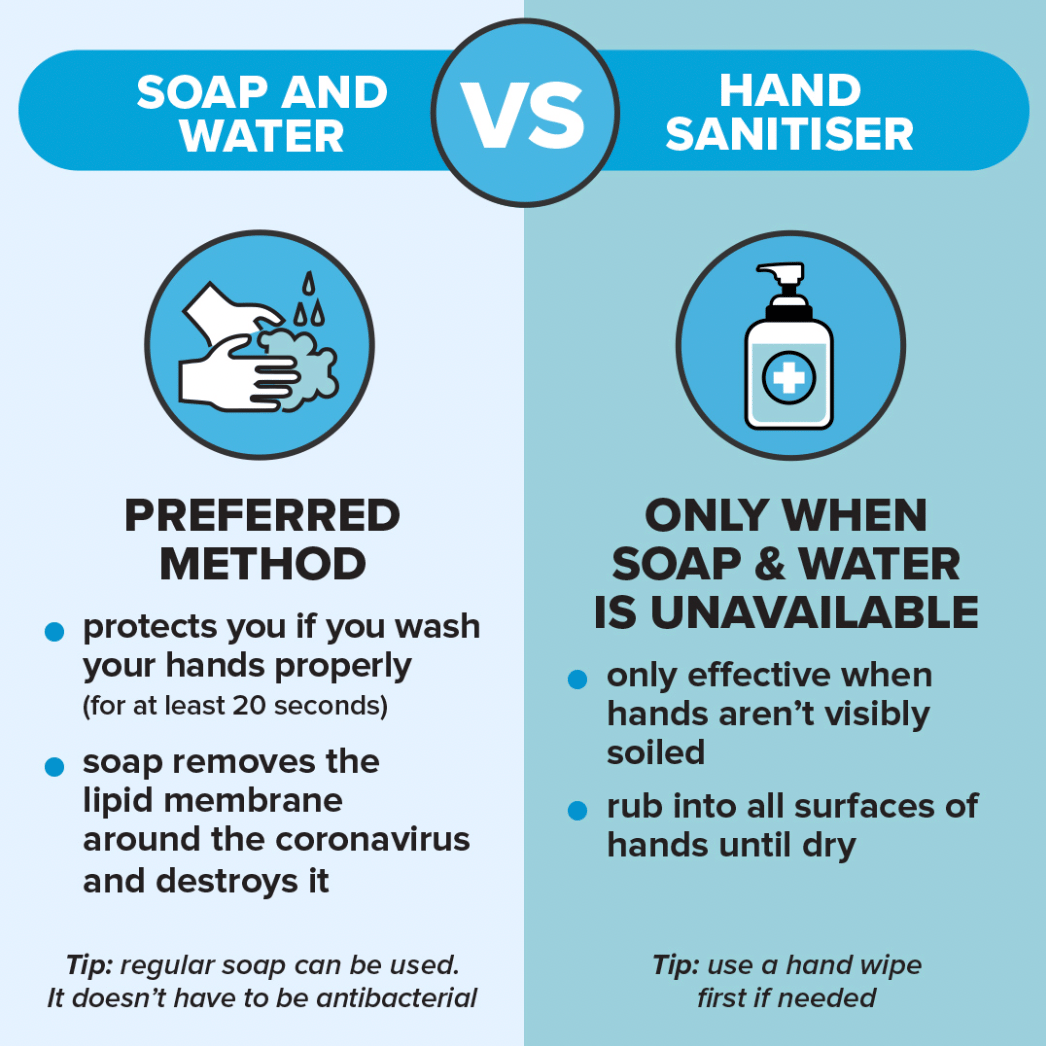
Why soap works better: Soap mechanically lifts and removes microbes along with dirt and oils. The surfactants in soap surround microbes and contaminants, allowing water to rinse them away. This physical removal works against all pathogens, including spores and non-enveloped viruses that resist alcohol.
4. Proper Technique: Why Most People Use It Wrong ✋⏱️
Most people use hand sanitizer incorrectly, destroying its effectiveness. Studies show typical users apply too little product, don't cover all hand surfaces, and don't allow sufficient contact time.
Proper technique (CDC guidelines):
Use adequate volume: Apply product to palm (about a quarter-sized amount, 3-5 mL). Most people use half this amount. Insufficient product means incomplete coverage, allowing pathogens to survive in untreated areas.
Rub hands together covering all surfaces: Palms, backs of hands, between fingers, fingertips, thumbs, and wrists. Each area needs contact. Observational studies show people miss fingertips, thumbs, and between fingers most frequently.
Continue rubbing until dry: This takes 20-30 seconds minimum. Don't wipe off or rinse. The drying process ensures adequate contact time. Most people stop after 5-10 seconds, before alcohol has sufficient time to denature proteins.
Don't use on soiled hands: If hands look dirty or greasy, sanitizer won't work. Wash with soap and water first.
Common mistakes reducing effectiveness:
Using too little product (50% reduction in efficacy)
Stopping before hands are dry (70% reduction)
Missing hand surfaces like fingertips (allows pathogen survival in untreated areas)
Using on wet hands (dilutes alcohol below effective concentration)
Using sanitizer immediately after handwashing (wet hands dilute alcohol)
Healthcare setting data: Even trained healthcare workers use hand sanitizer incorrectly 40-60% of the time. Compliance with proper technique is even lower in general public settings.
5. The Antimicrobial Resistance Concern Nobody's Talking About 🦠⚠️
The good news: Alcohol-based hand sanitizers don't create antimicrobial resistance. The mechanism (protein denaturation, membrane disruption) is too broad and rapid for bacteria to develop resistance. No evidence exists of bacteria developing alcohol resistance from hand sanitizer use.
The concern with non-alcohol sanitizers: Products using triclosan, benzalkonium chloride, or other chemical antimicrobials instead of alcohol can promote resistance. These work through specific mechanisms bacteria can evolve to bypass. FDA banned triclosan from consumer soaps in 2016 due to resistance concerns and lack of proven benefit over soap.
The indirect resistance risk: Overreliance on hand sanitizers in situations requiring soap (like after bathroom use or before food prep) allows resistant organisms (C. diff spores, norovirus) to spread. Hospital outbreaks of C. difficile have been linked to healthcare workers using sanitizer instead of soap when caring for infected patients.
The behavioral concern: Easy access to sanitizer may reduce handwashing frequency. If people substitute sanitizer for soap in situations where soap is necessary, pathogen transmission increases. Studies show sanitizer availability doesn't increase overall hand hygiene compliance, people use it instead of washing, not in addition.
Environmental and skin microbiome impacts: Frequent sanitizer use disrupts the beneficial skin microbiome. While this recovers quickly, chronic disruption may reduce the skin's natural defense against pathogens. Some research suggests excessive sanitizer use in children may affect microbiome development and immune system education, though evidence is preliminary.
Small Budget, Big Impact: Outsmart Your Larger Competitors

Being outspent doesn't mean being outmarketed. Our latest resource showcases 15 small businesses that leveraged creativity instead of cash to achieve remarkable marketing wins against much larger competitors.
Proven techniques for standing out in crowded markets without massive budgets
Tactical approaches that turn resource constraints into competitive advantages
Real-world examples of small teams creating outsized market impact
Ready to level the playing field? Download now to discover the exact frameworks these brands used to compete and win.
Takeaways
Hand sanitizers with 60-95% alcohol effectively kill most bacteria and enveloped viruses (COVID-19, flu, HIV) within 15-30 seconds through protein denaturation, but real-world effectiveness is 50-70% due to improper technique, with most people applying too little product, missing hand surfaces, and stopping before the required 20-30 second contact time.
Sanitizers are completely ineffective against bacterial spores (C. difficile), non-enveloped viruses (norovirus, hepatitis A), parasites (Giardia), and don't remove physical contaminants, making soap and water essential after bathroom use, before food preparation, or when hands are visibly dirty.
The "99.9% of germs" claim is accurate only in controlled lab conditions with clean hands and specific test bacteria, not real-world scenarios with organic matter, and proper technique requires quarter-sized amount (3-5mL), covering all hand surfaces including fingertips and between fingers, and rubbing until completely dry rather than the 5-10 seconds most people use.
Feedback & Sponsorship
What'd you think of this week's newsletter? Hit reply to let us know. Did we crush it? Blow your mind? We read every response.
Want your brand in front of hundreds of thousands of readers? Contact us for sponsorship opportunities [email protected]
Want more where that came from? Head to our website
Like Moneyball for Stocks

The data that actually moves markets:
Congressional Trades: Pelosi up 178% on TEM options
Reddit Sentiment: 3,968% increase in DOOR mentions before 530% in gains
Plus hiring data, web traffic, and employee outlook
While you analyze earnings reports, professionals track alternative data.
What if you had access to all of it?
Every week, AltIndex’s AI model factors millions of alt data points into its stock picks.
We’ve teamed up with them to give our readers free access for a limited time.
The next big winner is already moving.
Past performance does not guarantee future results. Investing involves risk including possible loss of principal.
Reply