- Aeviva
- Posts
- Aspartame vs. Sugar – Which One Is Actually Poisoning You Less?
Aspartame vs. Sugar – Which One Is Actually Poisoning You Less?
200 times sweeter than sugar with zero calories sounds too good to be true, because it might be.

Estimated Read Time: 5 minutes
Aspartame is in 6,000+ products and consumed by 200 million people globally.
The WHO classified it as "possibly carcinogenic" in 2023, yet still says it's safe at current consumption levels.
Meanwhile, sugar is definitively linked to obesity, diabetes, and heart disease killing millions annually.
Today's Issue
Main Topic: Comparing the health effects of aspartame versus sugar based on evidence
Subtitles:
What aspartame does in your body vs. what sugar does
The cancer controversy: separating fear from facts
Metabolic effects: insulin, appetite, and weight gain
Which one is actually worse for your health
The honest answer nobody wants to hear
Abstract: Aspartame, an artificial sweetener 200 times sweeter than sugar with zero calories, is consumed in thousands of products despite ongoing safety debates. While the WHO classified it as "possibly carcinogenic" (Group 2B, same as aloe vera and pickled vegetables) in 2023, the safe consumption threshold remains 40mg/kg body weight daily, which most people don't exceed. Sugar, conversely, has definitive causal links to obesity, type 2 diabetes, cardiovascular disease, and fatty liver disease, with Americans consuming 77g daily versus the recommended 25-38g. Aspartame breaks down into aspartic acid, phenylalanine, and methanol, all found naturally in foods at higher levels. Evidence for aspartame causing cancer in humans is weak, while sugar's metabolic harm is conclusive. However, artificial sweeteners may not aid weight loss and could alter gut microbiota and insulin responses. This newsletter compares mechanisms, evidence quality, and provides a framework for choosing between them.Introduction
The aspartame versus sugar debate epitomizes nutritional confusion. One side warns that aspartame is a "toxic chemical" causing cancer and neurological damage. The other counters that sugar is definitively killing people through metabolic disease. Both can't be equally bad, yet both have concerning evidence. The WHO's 2023 classification of aspartame as "possibly carcinogenic" reignited fears, but the classification system is widely misunderstood.
"Possibly carcinogenic" (Group 2B) is the weakest cancer warning, indicating limited evidence in humans and insufficient evidence in animals. It's the same category as aloe vera, pickled vegetables, and working night shifts. Meanwhile, sugar's health impacts aren't "possible," they're proven and quantified. Understanding what each substance does in your body, evaluating evidence quality, and making informed choices requires looking past clickbait headlines to actual mechanisms and dose-response relationships.
Stay Calm, Energized & Radiant This Season
The holiday rush is here—don’t just survive it, glow through it. Start every day with Pique’s Sun Goddess Matcha, the ultimate ritual for calm focus, sustained energy, and radiant skin. Unlike coffee, which spikes and crashes your energy, this matcha keeps you steady, alert, and glowing from within. Crafted by Japanese tea masters in Kagoshima, it’s ceremonial-grade, organic, and shaded longer for higher L-theanine and chlorophyll—meaning more calm, more clarity, and a daily dose of antioxidants that support skin, detox, and immunity.
This isn’t just a drink—it’s your secret to thriving through the season. And now’s the perfect time to stock up or gift it. For a limited time, get up to 20% off for life + free gifts.
✨ Elevate your ritual. Energize your glow.
1. What Aspartame Does in Your Body vs. What Sugar Does 🧪🍬
Aspartame metabolism: When consumed, aspartame breaks into three components: aspartic acid (40%, an amino acid), phenylalanine (50%, another amino acid), and methanol (10%, a type of alcohol).
These metabolites are identical to those from eating regular food. A glass of tomato juice contains 6 times more methanol than an equivalent serving of aspartame-sweetened drink. A serving of milk contains 10 times more phenylalanine.
The only exception is people with phenylketonuria (PKU), a rare genetic disorder preventing phenylalanine metabolism.
For them, aspartame is dangerous, which is why products must carry PKU warnings. For everyone else, the metabolites are handled by normal metabolism.
Sugar metabolism: Sugar (sucrose) breaks into glucose and fructose. Glucose enters bloodstream, triggering insulin release to shuttle it into cells.
Excess glucose is stored as glycogen (limited capacity) or converted to fat. Fructose bypasses insulin regulation, going straight to the liver where it's converted to fat, contributing to non-alcoholic fatty liver disease when consumed in excess.
Americans consume 77g of added sugar daily, triple the American Heart Association's recommendation of 25-38g.
Immediate metabolic effects: Sugar causes blood glucose spikes, insulin surges, and energy crashes. Aspartame doesn't affect blood glucose or insulin in most people (though emerging research suggests possible effects on insulin sensitivity with chronic use).
Sugar provides 4 calories per gram; aspartame provides effectively zero.
💡 Critical Context: The compounds aspartame breaks down into are not "toxic chemicals," they're amino acids and methanol that you consume in higher amounts from regular food. The fear is about dose and context, not the substances themselves.
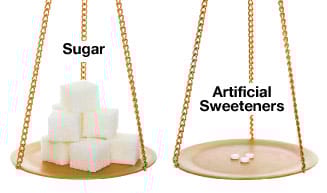
2. The Cancer Controversy: Separating Fear From Facts ⚠️🔬
The WHO classification explained: In July 2023, the International Agency for Research on Cancer (IARC) classified aspartame as Group 2B: "possibly carcinogenic to humans."
This sounds alarming until you understand the classification system evaluates strength of evidence, not level of risk.

Group 1 (definite carcinogen): Strong evidence causes cancer (tobacco, processed meat, alcohol).
Group 2A (probable carcinogen): Limited human evidence, strong animal evidence (red meat, very hot beverages).
Group 2B (possible carcinogen): Limited human evidence, insufficient animal evidence (aspartame, aloe vera, pickled vegetables, carpentry work).
Group 3: Not classifiable.
Group 4: Probably not carcinogenic (only one substance ever classified here).
Being in Group 2B means the evidence is weak and inconsistent, not that aspartame definitely causes cancer at levels people consume. The classification is based on three human studies showing possible associations with liver cancer, which had methodological limitations and haven't been consistently replicated.
The safe consumption level: The same week IARC classified aspartame as possibly carcinogenic, JECFA (Joint FAO/WHO Expert Committee on Food Additives) reaffirmed that aspartame is safe at the Acceptable Daily Intake (ADI) of 40mg per kg of body weight.
For a 70kg person, that's 2,800mg daily, equivalent to 9-14 cans of diet soda. Studies show 99% of consumers stay well below this threshold.
Animal study concerns: High-dose animal studies have shown mixed results. Some found increased cancer rates at massive doses; others found no effect. The doses used are often 100-1,000 times higher than human consumption. Translating these findings to realistic human exposure is questionable.
3. Metabolic Effects: Insulin, Appetite, and Weight Gain 📊⚖️
Sugar's metabolic damage is proven: Excess sugar consumption directly causes obesity, type 2 diabetes, cardiovascular disease, fatty liver disease, and metabolic syndrome.
A 2014 study found that people getting 25%+ of calories from added sugar had triple the cardiovascular death risk of those consuming <10%. The mechanisms are well-established: insulin resistance, chronic inflammation, lipogenesis (fat creation), and hormonal dysregulation.

Aspartame Structure
Aspartame's metabolic effects are murkier: Originally marketed as a weight-loss tool, evidence shows artificial sweeteners don't reliably promote weight loss and may even contribute to weight gain. Possible mechanisms:
Appetite dysregulation: Sweet taste without calories may confuse satiety signals, causing compensatory eating. Some studies show people consuming artificial sweeteners eat more later.
Gut microbiome changes: Recent research shows artificial sweeteners alter gut bacteria composition.
Insulin and glucose effects: While aspartame doesn't directly raise blood sugar, some evidence suggests it may affect insulin sensitivity with chronic use, though findings are inconsistent.
Cravings and taste preference: Regular artificial sweetener use may increase preference for intensely sweet foods, making it harder to enjoy naturally sweet fruits and vegetables.
Weight loss evidence is disappointing: Randomized trials show modest or no weight loss from switching to artificial sweeteners. Observational studies paradoxically show associations between artificial sweetener use and weight gain, though this could be reverse causation (people gaining weight switch to diet drinks).
4. Which One Is Actually Worse for Your Health? 💀
The definitive harm comparison:
Sugar's proven harms:
Obesity: Excess sugar is a primary driver of the obesity epidemic
Type 2 diabetes: Direct causal relationship through insulin resistance
Cardiovascular disease: Increased triglycerides, inflammation, blood pressure
Fatty liver: Fructose metabolism causes hepatic fat accumulation
Dental cavities: Bacteria feed on sugar, producing acid that erodes enamel
Premature aging: Glycation damages proteins, including collagen

Aspartame's suspected but unproven harms:
Cancer: Weak evidence, inconsistent findings, below safe consumption thresholds
Neurological effects: Anecdotal reports, no confirmed mechanism in healthy people
Metabolic effects: Possible gut microbiome changes, unclear clinical significance
Weight gain: Paradoxical associations, unclear if causal
The risk-benefit calculation: Sugar has definite, quantified, dose-dependent harms killing millions annually.
Aspartame has possible, unproven, controversial risks at realistic consumption levels.
If forced to choose, aspartame appears less harmful than sugar for most people, but neither is optimal.
💡 Pro Tip: The false dichotomy is the real problem. The question shouldn't be "aspartame or sugar?" but "why are we consuming so many intensely sweet products?" Both train your palate to expect hyper-sweetness.
5. The Honest Answer Nobody Wants to Hear 🎯💬
For most people in most contexts:
If you're consuming excess sugar (77g daily average), replacing some with aspartame will likely improve metabolic health despite possible microbiome effects. The proven harms of sugar outweigh the theoretical risks of aspartame at normal consumption levels.
If you're drinking 6+ diet sodas daily, you're approaching the ADI threshold and should probably reduce consumption. The long-term effects of chronic high-dose artificial sweetener use aren't fully understood.
The best choice is reducing overall sweetness preference. Water, unsweetened tea, black coffee, and gradually reducing added sweeteners (artificial or caloric) retrains your palate. Studies show that people who eliminate intense sweetness for 2-3 months report that previously normal levels taste too sweet.
Individual variation matters: Some people's gut bacteria react poorly to artificial sweeteners. If you notice digestive issues, glucose dysregulation, or increased cravings, your biology may not tolerate them well.
The context is modern diet: In a diet full of whole foods with minimal processed products, the occasional diet soda or sugar-sweetened treat is irrelevant. The problem is when intense sweetness (artificial or caloric) is consumed multiple times daily, which is typical in Western diets.
My honest take: Sugar is definitively worse than aspartame for metabolic health. If choosing between regular and diet soda, diet is likely the better choice despite imperfect evidence. But the real solution is drinking mostly water. Both sugar and artificial sweeteners perpetuate sweet-seeking behavior and displace healthier options. The goal should be reducing total sweet consumption, not optimizing which type of sweet you consume.

Takeaways
Sugar causes definite, quantified harm through proven mechanisms (insulin resistance, inflammation, fatty liver, cardiovascular disease) killing millions annually, while aspartame's risks are theoretical, inconsistent, and unproven at normal consumption levels below 40mg/kg body weight daily.
Aspartame's "possibly carcinogenic" classification (Group 2B) is the weakest cancer warning, based on limited, inconsistent human evidence, placing it alongside aloe vera and pickled vegetables, not tobacco or processed meat, with 99% of consumers staying well below safe intake thresholds.
Neither is optimal, but if choosing between them, replacing excess sugar with aspartame likely improves metabolic health for most people, though the best strategy is reducing overall sweetness preference through gradual elimination of both, retraining taste to appreciate less intense sweetness.Feedback & Sponsorship
What'd you think of this week's newsletter? Hit reply to let us know. Did we crush it? Blow your mind? We read every response.
Want your brand in front of hundreds of thousands of readers? Contact us for sponsorship opportunities [email protected]
Want more where that came from? Head to our website
Will A Book Grow Your Business?

No one buys a beach house from book sales—they buy it from what the book makes possible.
Author.Inc helps founders turn ideas into world-class books that build revenue, reputation, and reach.
Book a free 15-minute ROI call to see if your book is a go—or a smart wait.
Reply