- Aeviva
- Posts
- Does Bedtime Consistency Matter More Than Sleep Duration for Your Health
Does Bedtime Consistency Matter More Than Sleep Duration for Your Health
Surprising research reveals why going to bed at the same time might be more important than how long you sleep
In partnership with

Abstract
Recent sleep research challenges the traditional focus on sleep duration by highlighting the critical importance of bedtime consistency for health outcomes.
Studies demonstrate that irregular sleep schedules disrupt circadian rhythms more significantly than moderate sleep restriction.
Social jetlag from weekend schedule variations increases metabolic dysfunction and cardiovascular disease risk. While adequate sleep duration remains important, maintaining consistent bedtimes may provide superior health benefits.
Travel-Ready Creatine: Peak Performance Anywhere, Anytime

Your routine shouldn’t stop when you’re on the move. Momentous Creatine comes in travel-ready packs of Creapure®️—the gold standard of creatine monohydrate, NSF Certified for purity and safety. No fillers. No artificial ingredients. Just proven performance. Fuel your best with Momentous Creatine. Use code HIVE for 35% off.
Does Bedtime Consistency Matter More Than Sleep Duration
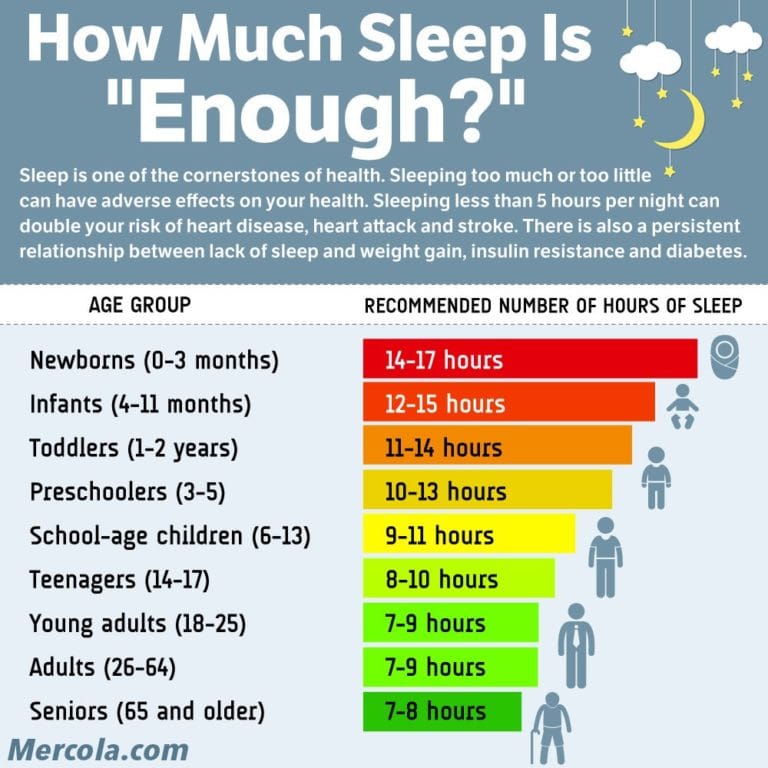
Most sleep advice focuses on getting 7-9 hours of sleep per night, but groundbreaking research suggests that when you sleep might be more important than how long you sleep. Your body's internal clock thrives on predictability 🕐.
People who maintain consistent bedtimes but get 6-7 hours often experience better health outcomes than those who get 8+ hours with irregular schedules. This finding challenges everything we thought we knew about optimal sleep habits 📊.
Understanding the science behind sleep timing consistency could revolutionize your approach to rest and significantly improve your health and performance 🧠.
Your Internal Clock Demands Consistency
Your body operates on a roughly 24-hour circadian rhythm controlled by your brain's master clock ⏰. This coordinates hormone production, body temperature, metabolism, and dozens of other physiological processes.
Melatonin production begins rising around 9 PM, signaling your body to prepare for sleep 🌙. Core body temperature drops, cortisol declines, and digestive processes slow down. This coordinated biological symphony requires consistent timing to function optimally.

Melatonin 😴
When you go to bed at drastically different times, you give your body conflicting signals about when to activate these processes. Your circadian clock becomes confused, leading to a cascade of health problems 🔄.
Fun Fact: Your liver, muscles, and other organs have their own circadian clocks that sync with your brain's master clock, which is why irregular sleep affects metabolism and physical performance.
Social jetlag occurs when your weekend sleep schedule differs from weekdays 📅. Even shifting bedtime by 2-3 hours on weekends can disrupt your rhythm for several days.
The Health Impact of Irregular Sleep
Research involving over 60,000 adults found that people with irregular sleep schedules had significantly higher risks of cardiovascular disease, diabetes, and obesity regardless of total sleep duration 📊. Sleep timing variability of just 90 minutes increased heart disease risk by 33%.
Irregular bedtimes disrupt glucose metabolism and insulin sensitivity 🍯. People with inconsistent schedules have higher blood sugar levels and increased diabetes risk, even when controlling for sleep duration.
Sleep schedule inconsistency impairs memory, attention, and executive function more than moderate sleep restriction 🧠. Students with regular bedtimes but shorter sleep often outperform peers who get more sleep at irregular times.
Sleep Pattern | Heart Disease Risk | Diabetes Risk | Cognitive Performance |
|---|---|---|---|
Consistent 6-7 hours | Baseline | Baseline | Good |
Consistent 8+ hours | Lower | Lower | Excellent |
Irregular 7-8 hours | +33% higher | +25% higher | Impaired |
Why Consistency Trumps Duration
Hormonal synchronization occurs when sleep timing is consistent, helping coordinate growth hormone, cortisol, and insulin release 💊. Irregular schedules disrupt this hormonal orchestra, leading to metabolic dysfunction.
Your body anticipates sleep onset when bedtime is consistent, optimizing progression through sleep stages ♨️. This leads to more efficient deep sleep and REM sleep, even with shorter total duration.
Regular sleep schedules strengthen your circadian rhythm, making it more resilient to occasional disruptions 💪. People with consistent schedules recover faster from travel or temporary sleep loss.
Fun Fact: Elite athletes often prioritize consistent bedtimes over maximum sleep duration because regular schedules improve recovery and performance more effectively than extra sleep with irregular timing.
The Weekend Sleep Trap
Many people try to "catch up" on sleep during weekends by sleeping in for extra hours 😴. While this might feel restorative, weekend oversleep can actually make you feel worse and disrupt your sleep schedule.
Sleeping 2-3 hours later on weekends creates mini jetlag effects 🌍. Your circadian clock shifts later, making it harder to fall asleep Sunday night and wake up Monday morning.
Instead of dramatically extending weekend sleep, maintain similar bedtimes and allow for only 1-2 extra hours 📅. If you're sleep-deprived, short afternoon naps (20-30 minutes) provide better recovery without disrupting nighttime schedules ⏰.
Optimal Sleep Consistency Strategies
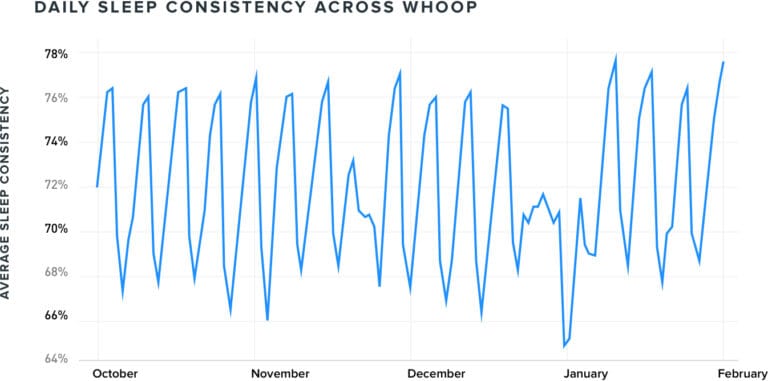
Optimal Sleep Consistancy. - Whoop
The 30-Minute Rule Aim to go to bed and wake up within 30 minutes of the same time every day, including weekends 🎯. This window provides flexibility while maintaining circadian rhythm stability.
When shifting your schedule, change bedtime by only 15-30 minutes per day rather than making dramatic jumps ⏰. Get bright light exposure within 1 hour of waking to reinforce your circadian rhythm 🌅.
Keep weekend bedtimes within 1-2 hours of your weekday schedule 📅. If you must stay up late, avoid sleeping past your normal wake time by more than 1-2 hours.
Quick Recovery Strategies
After occasional late nights, return to your regular schedule immediately rather than sleeping in 🔄. Your circadian rhythm recovers faster with consistent wake times than with schedule compensation.
If you must recover from sleep loss, limit naps to 20-30 minutes before 3 PM ⏰. Allow yourself maximum 1-2 extra hours of sleep on weekends 📅.
Conclusion
Bedtime consistency emerges as a more powerful health predictor than sleep duration alone 🎯. While adequate sleep remains important, maintaining regular sleep schedules provides superior benefits for metabolism, cognitive function, and overall health.
Prioritizing schedule consistency over weekend sleep-ins can improve your health more than simply trying to get more hours of sleep 📅. Small adjustments toward regular bedtimes yield significant long-term benefits.
Go from AI overwhelmed to AI savvy professional

AI will eliminate 300 million jobs in the next 5 years.
Yours doesn't have to be one of them.
Here's how to future-proof your career:
Join the Superhuman AI newsletter - read by 1M+ professionals
Learn AI skills in 3 mins a day
Become the AI expert on your team
Take-Home Summary
Sleep schedule consistency matters more than duration for cardiovascular health, metabolism, and cognitive performance
Social jetlag from weekend changes increases disease risk by 25-33% regardless of total sleep hours
Maintaining bedtimes within a 30-minute window daily optimizes circadian rhythm function
Weekend sleep-ins beyond 1-2 extra hours disrupt rhythms and create weeklong problems
Gradual schedule changes of 15-30 minutes per day allow proper circadian adjustment
Combining adequate duration with consistent timing provides optimal sleep benefits
How 433 Investors Unlocked 400X Return Potential

Institutional investors back startups to unlock outsized returns. Regular investors have to wait. But not anymore. Thanks to regulatory updates, some companies are doing things differently.
Take Revolut. In 2016, 433 regular people invested an average of $2,730. Today? They got a 400X buyout offer from the company, as Revolut’s valuation increased 89,900% in the same timeframe.
Founded by a former Zillow exec, Pacaso’s co-ownership tech reshapes the $1.3T vacation home market. They’ve earned $110M+ in gross profit to date, including 41% YoY growth in 2024 alone. They even reserved the Nasdaq ticker PCSO.
The same institutional investors behind Uber, Venmo, and eBay backed Pacaso. And you can join them. But not for long. Pacaso’s investment opportunity ends September 18.
Paid advertisement for Pacaso’s Regulation A offering. Read the offering circular at invest.pacaso.com. Reserving a ticker symbol is not a guarantee that the company will go public. Listing on the NASDAQ is subject to approvals.
Reply